Why People Trust ‘Lucky Rituals’ Before Gambling
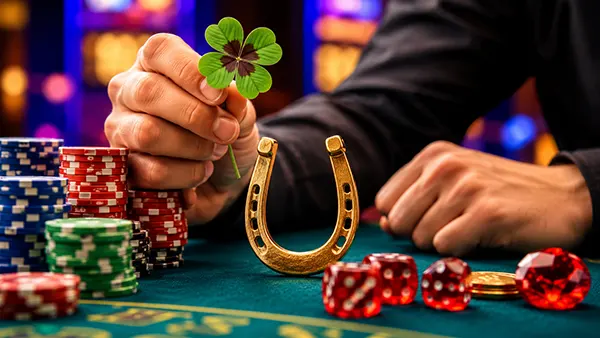
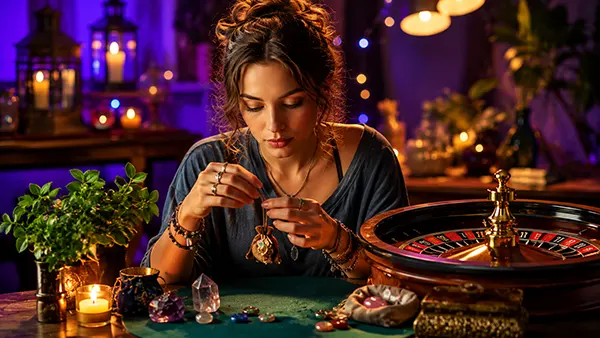
Many people who participate in gambling activities develop personal habits or rituals that they believe can improve their chances of success. These behaviours may include wearing a particular item of clothing, choosing a favourite seat, selecting certain numbers, or following a specific routine before placing a bet. Although modern gambling outcomes are determined by chance and mathematical probability, lucky rituals remain common across different cultures and generations. Understanding why people trust these practices requires a closer look at psychology, human behaviour, and the way the brain responds to uncertainty.
The Psychological Need for Control During Uncertain Events
Gambling is an activity built around uncertainty. Players know that the outcome of a slot spin, roulette wheel, lottery draw, or card hand cannot be predicted with certainty. This lack of control often creates tension, especially when money is involved. Lucky rituals can provide a sense of stability in situations where the result remains unknown.
Psychologists have long studied what is known as the “illusion of control”. This concept describes a person’s tendency to believe they can influence events that are actually determined by chance. Research has shown that people often feel more confident when they perform actions that appear connected to a desired outcome, even if no real connection exists.
When individuals repeat a ritual before gambling, they may experience reduced anxiety and increased confidence. The ritual itself does not change the odds, but it can influence emotional comfort. For many players, feeling calmer and more prepared is enough to reinforce the belief that the ritual is beneficial.
How Repeated Experiences Strengthen Belief
Lucky rituals often become stronger through personal experiences. If someone performs a particular action before a winning session, the brain may connect the ritual with the positive outcome. This association can form quickly, even when the result was entirely random.
Human memory naturally gives greater attention to events that support existing beliefs. A player may remember the occasions when a lucky charm was present during a win while forgetting the many times the same charm was present during losses. This selective recall contributes to the persistence of superstitious behaviour.
Over time, repeated exposure to these memories can create a powerful sense of conviction. Even when evidence suggests the ritual has no influence on results, the emotional impact of previous wins can make the belief difficult to abandon.
Cultural Traditions and Social Influence
Lucky rituals are not limited to individual experiences. Many beliefs about luck originate from cultural traditions that have existed for centuries. Different societies associate certain numbers, colours, objects, or actions with either good fortune or bad luck. These traditions often extend into gambling behaviour.
For example, some people avoid the number thirteen because it has historically been considered unlucky in several Western countries. In contrast, the number eight is often viewed positively in many Asian cultures due to its association with prosperity and success. Such beliefs frequently influence betting choices and number selections.
Social influence also plays an important role. Friends, family members, and fellow gamblers often share stories about lucky habits that supposedly contributed to a win. Hearing these stories repeatedly can encourage others to adopt similar practices, even without objective evidence supporting their effectiveness.
Why Shared Beliefs Feel More Credible
People tend to trust information that is accepted by those around them. When a ritual is supported by a community or social group, it may appear more reliable than if it were practised by a single individual. This effect can strengthen confidence in superstitions and lucky routines.
Casinos, sporting events, and betting communities frequently become environments where stories about luck circulate. Accounts of successful outcomes linked to specific rituals often receive more attention than stories where the same rituals produced no benefit.
The repetition of these narratives creates a sense of collective validation. Even though luck-based beliefs are not supported by probability theory, widespread acceptance can make them feel more convincing and meaningful to participants.
The Brain’s Search for Patterns and Meaning
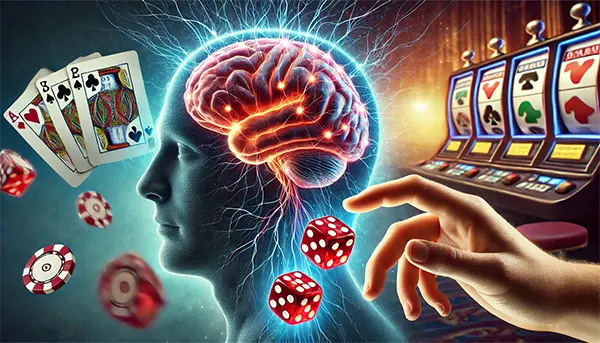
The human brain is highly effective at recognising patterns. This ability helps people learn, make decisions, and navigate complex environments. However, it can also lead individuals to identify connections between unrelated events.
In gambling, random outcomes can sometimes produce sequences that appear meaningful. A player may notice that a win occurred after performing a particular ritual and interpret the coincidence as evidence of a cause-and-effect relationship. In reality, random events regularly generate patterns that seem significant even when they are not.
Neuroscientists suggest that pattern recognition developed as an evolutionary advantage because recognising genuine relationships between events helped humans survive. The challenge is that the same mental process can occasionally produce false conclusions when applied to random situations.
Why Lucky Rituals Continue Despite Modern Knowledge
Most modern gamblers understand that casino games, lotteries, and betting markets operate according to mathematical principles rather than superstition. Nevertheless, lucky rituals continue because they satisfy emotional needs that logic alone does not always address.
Performing a familiar routine can create comfort, confidence, and a feeling of preparedness. These emotional benefits may improve the overall experience, even though they do not influence the statistical probability of winning. As a result, many people maintain their rituals while fully recognising their symbolic nature.
The enduring popularity of lucky rituals demonstrates how human behaviour is shaped not only by facts and numbers but also by emotions, traditions, memories, and personal meaning. As long as gambling involves uncertainty, many players will continue to place trust in rituals that help them feel more confident before the game begins.